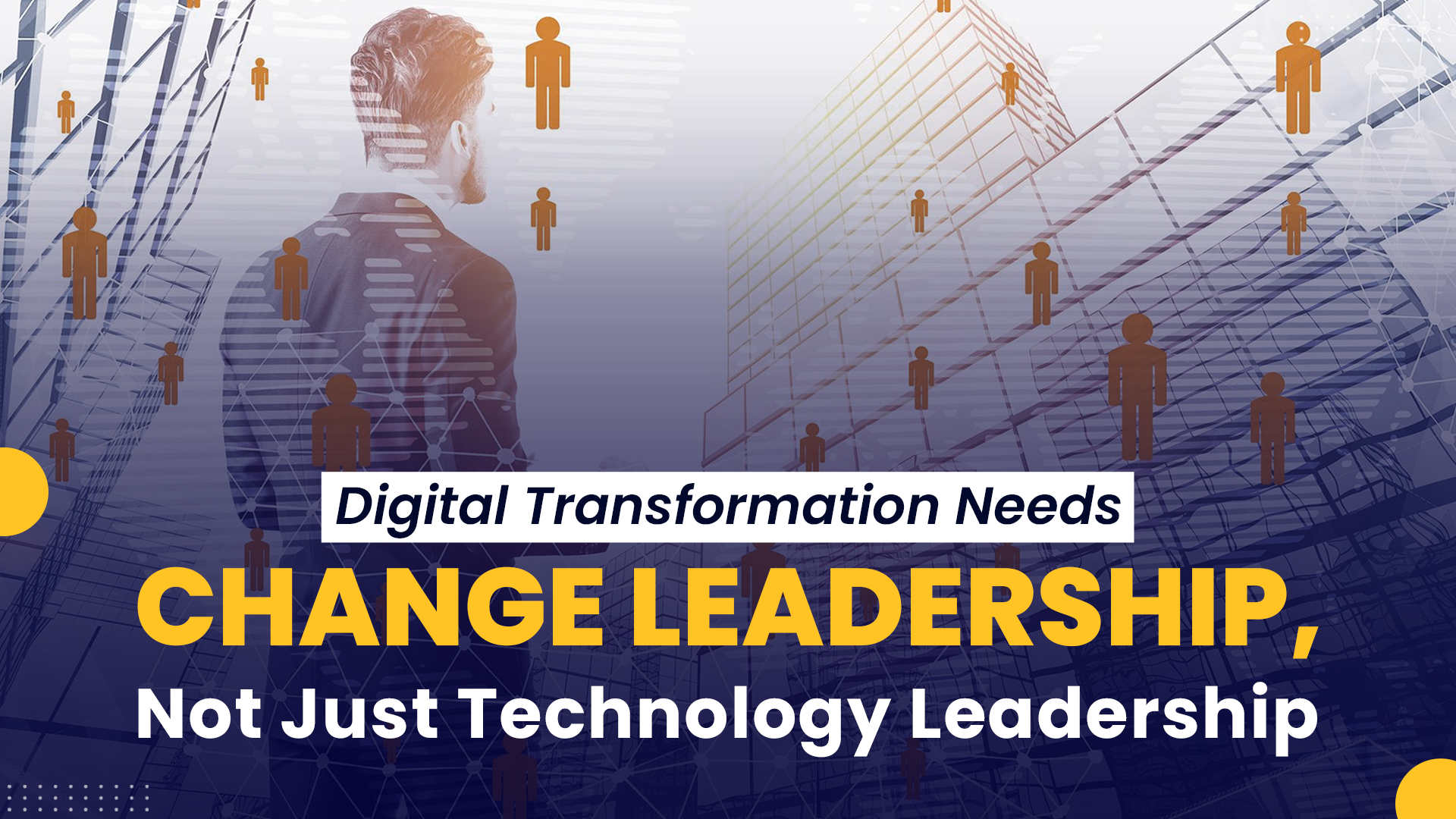
89% of companies are investing heavily in digital transformation – integrating AI, cloud platforms, and automation into their operations. Yet, only one-third achieve their expected revenue goals. The numbers tell a sobering story. When it comes to digital transformation, it’s not the technology that determines success. It’s the people using that technology.
For years, organisations have approached digital transformation as primarily a technical challenge. They’ve poured resources into selecting the right platforms, hiring data scientists, and upgrading infrastructure. Yet time and again, these initiatives stall not because the technology failed, but because the organisation wasn’t ready for it.
The missing ingredient is change leadership – the deliberate, strategic focus on preparing people, reshaping culture, and guiding organisations through the human complexities of transformation.
Why Technology Leadership Alone Falls Short
Technology leaders excel at evaluating systems, architecting solutions, and managing implementation timelines. These skills are necessary but insufficient for transformation success.
Digital transformation fundamentally redefines how work gets done. It shifts decision-making processes, alters collaboration patterns, and often threatens established power structures. Employees face uncertainty about their roles, fear displacement by AI, and struggle with new skill requirements. Middle managers worry about relevance. Senior leaders grapple with cultural inertia.
These are not technical problems. They’re human problems that require change leadership.
Research from Harvard Business Review confirms this reality. The primary reason digital and AI transformation projects fail is neglecting the human side of change. Organisations focus on IT budgets and ROI projections while overlooking the critical work of building awareness, addressing resistance, and developing new capabilities across the workforce.
The result? Frustrated employees reverting to old processes. Expensive technology sitting underutilised. Projects that technically “go live” but never deliver promised value – which explains why only one-third of the 89% of investing in digital transformation actually achieve their expected revenue goals.
The Amplified Challenge of AI Transformation
AI transformation intensifies these challenges. Unlike previous waves of digital change, AI directly impacts knowledge work and decision-making, areas that define professional identity and expertise.
Consider the common AI transformation challenges:
Resistance rooted in fear: Employees worry about job displacement or becoming obsolete. This fear manifests as skepticism about AI accuracy, reluctance to share data, or passive non-compliance with new workflows.
Skills gaps in digital literacy: Many workers lack basic understanding of how AI works, what it can and cannot do, and how to collaborate effectively with AI tools. Without this foundation, adoption remains superficial.
Siloed departments: AI initiatives often require cross-functional collaboration and data sharing. Organisations with entrenched silos struggle to break down barriers, limiting AI’s potential impact.
Cultural resistance to innovation: Companies with risk-averse cultures or hierarchical decision-making structures find it difficult to embrace the experimentation and agility that AI transformation requires.
Technology leadership can deploy AI platforms. But only change leadership can address these deeper organisational dynamics.
What Change Leadership Looks Like in Practice
Change leadership starts with a fundamental mindset shift: viewing transformation as a people journey, not just a technology project.
Effective change leaders recognise that change management must be integrated into digital transformation from day one for it to be successful. They ask different questions than technology leaders:
– How will this change affect different employee groups?
– What concerns and resistance should we anticipate?
– Who are our natural champions and influencers?
– What capabilities do people need to succeed in the new environment?
– How will we measure readiness and adoption, not just implementation milestones?
These leaders invest in structured change management methodologies. The percentage of leaders using standardised approaches has dropped below 70% for the first time in over a decade – a troubling trend, given that structured methodologies significantly improve success rates. This 70% drop in methodology adoption directly correlates with the disappointing results seen across 89% of companies investing in transformation.
Frameworks like the ADKAR Model provide clear pathways for moving individuals through change:
– Awareness of why change is needed
– Desire to support and participate
– Knowledge of how to change
– Ability to implement new skills and behaviors
– Reinforcement to sustain the change
Similarly, the PCT Model aligns four critical success factors: leadership sponsorship, project management, change management, and organisational readiness. This holistic approach ensures technical implementation and people readiness advance together.
Real-World Evidence: How Change Leadership Drives Results
The difference between technology-focused and change-led approaches becomes clear in practice.
The SAP S/4HANA implementation at ABC Co. demonstrates that technology transformation alone does not guarantee success—structured change management does. By leveraging the Prosci Methodology, the organization moved beyond system deployment to true adoption and performance improvement.
Through clearly defined success metrics, a phased approach (Prepare, Manage, Sustain), and the disciplined application of the ADKAR framework, ABC Co. not only addressed resistance and skill gaps but exceeded its targets—achieving over 90% user adoption, improving operational efficiency beyond expectations, and strengthening data accuracy and employee satisfaction.
Ultimately, this case reinforces a powerful insight: when change is managed intentionally—with leadership alignment, employee engagement, and sustained reinforcement—organizations don’t just implement new systems; they build a culture of adaptability and continuous improvement.
The Role of Digital Transformation Consulting Services
Many organisations lack internal expertise in change leadership. This is where specialised digital transformation consulting services become valuable.
Quality consultants bring more than generic advice. They offer research-backed methodologies, experience across industries and change types, and practical tools for managing the human side of transformation.
The best consultants focus on building internal capability, not creating dependency. They work collaboratively with leadership teams, coach managers to support their teams, and transfer knowledge that enables organisations to manage future changes independently.
When evaluating consulting partners, look for those who ask about your culture, employee concerns, and leadership readiness before discussing implementation plans. Beware of consultants who focus exclusively on technical aspects or promise quick fixes without addressing underlying organisational dynamics – approaches that contribute to why only one-third of transformation initiatives meet revenue goals despite 89% of companies investing heavily.
Also Read- Emotional Wellbeing: A Must for Senior Leaders
Practical Steps for Leaders
If you’re leading or planning a digital transformation, consider these actions:
Elevate change leadership to equal status with technology leadership.
Assign dedicated resources, budget, and executive attention to the people side of change.
Assess organisational readiness before launching initiatives.
Understand your starting point: leadership alignment, manager capability, employee readiness, and cultural factors that might help or hinder change. This assessment is critical given the declining use of standardised methodologies.
Invest in digital literacy and AI change management training.
Don’t assume people will figure it out. Provide role-specific training that builds both technical skills and confidence.
Communicate relentlessly and authentically.
Address fears directly. Explain the “why” behind changes. Share progress and setbacks honestly. Create forums for questions and feedback. Texas A&M’s success with 77% of employees receiving targeted communications demonstrates the power of proactive communication.
Build a coalition of change champions.
Identify influential employees at all levels who can model new behaviors, support peers, and provide feedback to leadership.
Measure adoption, not just implementation.
Track whether people are actually using new tools, following new processes, and achieving better outcomes. Use these insights to adjust your approach. The 70% readiness completion rate at Texas A&M provides a benchmark for measuring true organisational preparedness.
Foster a culture of continuous learning.
Digital transformation isn’t a one-time event. Create an environment where experimentation is encouraged, failure is treated as learning, and adaptation is expected.
Also Read- Is Change Management Certification Right for HR and L&D Leaders?
The Path Forward
Lead Transformation Through Change
Digital transformation will continue to accelerate but technology alone will never deliver its promised value. Organisations that succeed are those that treat transformation as a leadership and people journey, not just a systems upgrade.
At Marg Business Transformation, we help organisations embed change leadership at the core of digital and AI initiatives. Leveraging Prosci®-aligned, research-backed change management methodologies, we work with leaders to prepare their people, strengthen adoption, and translate transformation investments into sustained business outcomes. Our focus is not just implementation, but capability, so organisations are better equipped to manage change long after a project goes live.
If your digital or AI transformation is underway or at risk of stalling due to resistance, low adoption, or cultural inertia, now is the time to reset the approach.
Connect with Marg Business Transformation to explore how structured change leadership can help your organisation realise the full value of its digital transformation through people, not just technology.