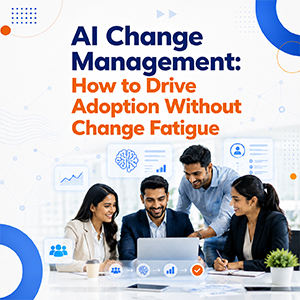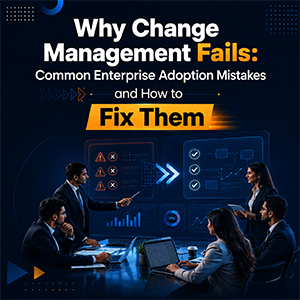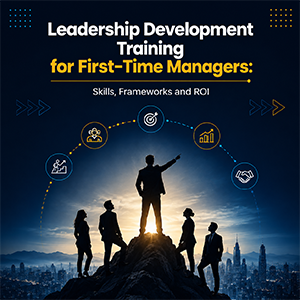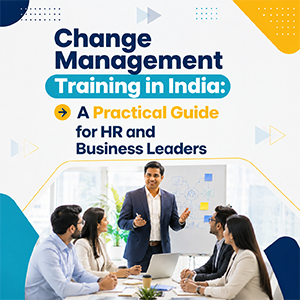
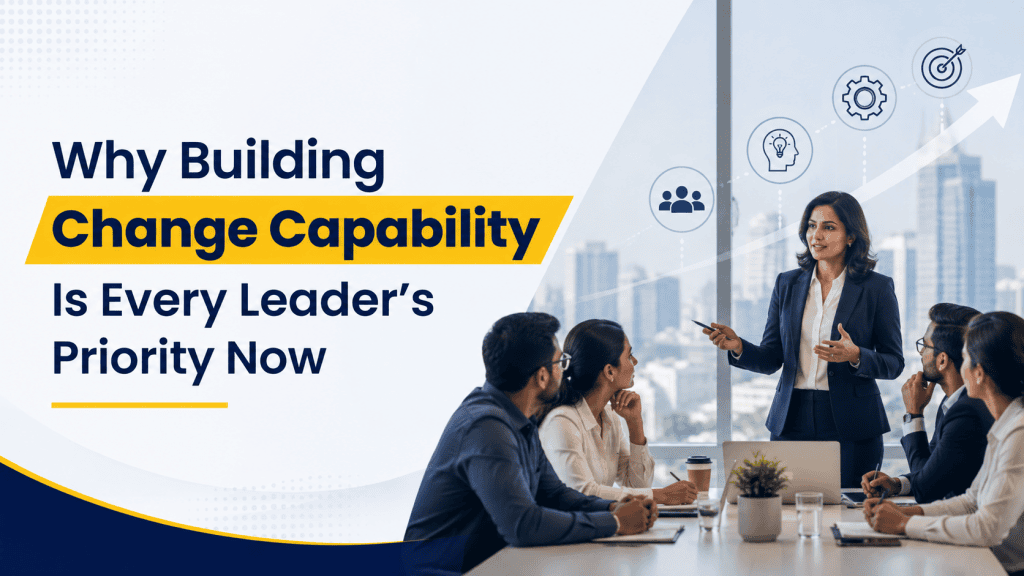
- Change capability is now a leadership priority. Organisations need leaders who can help people adapt continuously, not just manage one-time transformation projects.
- Enterprise change management makes change more repeatable. A shared framework, clear roles, practical tools, and adoption tracking help organisations reduce confusion and improve execution.
- Building change capability turns change into business capability. When leaders embed change into daily routines, teams become more confident, resilient, and ready for future transformation.
Building change capability is becoming essential as organisations can no longer prepare for change once, announce it formally, execute it through a project plan, and then return to "business as usual." Today, most organisations are managing many shifts at the same time. AI is changing how work gets done. Digital platforms are reshaping operations. Customer expectations are moving faster. Regulations are becoming more demanding.
In this environment, the real leadership challenge is not just managing one transformation well but helping the organisation become better at change itself. Building change leadership capability means developing leaders who can guide people through uncertainty, reinforce new behaviours, and help the organisation adapt continuously. It is no longer enough to have a strong strategy, a new technology roadmap, or a well-funded transformation programme. If people do not adopt the change, use it consistently, and adjust their ways of working, the business value remains limited.
From One-Time Change Management to Enterprise-Wide Change Capability
Traditional change management often begins when a specific project is already underway. But the pace at which businesses are growing today now demands a stronger model. Organisations need enterprise change management that is not limited to one project or one function. They need a common language, consistent tools, trained leaders, and internal change networks that can support multiple initiatives over time.
When an organisation has strong change capability, things don't start from zero every time something changes. Leaders know their role. Managers know how to guide their teams. Employees understand how to move through uncertainty. Trained change practitioners have proven tools. Sponsors are more active. Resistance is addressed earlier. Adoption is measured more clearly.
This creates a stronger foundation for every major initiative and improves enterprise change agility, whether the change involves AI adoption, digital transformation, restructuring, culture change, compliance, merger integration, or process improvement.
What is Change Capability
Change capability is the organisation's ability to prepare for, implement, adopt, and sustain change in a consistent and effective way. It includes several layers.
- At the leadership level — leaders understand their role as sponsors of change. They communicate clearly, stay visible, remove barriers, and reinforce the right behaviours.
- At the manager level — people managers can translate enterprise priorities into team-level action, helping employees understand what is changing, why it matters, what support is available, and how success will be measured.
- At the employee level — people have the mindset, skills, and confidence to adapt to new tools, processes, structures, and expectations.
- At the organisational level — there are systems, methods, governance models, and metrics that make change repeatable.
In short, building change capability is a business discipline that connects strategy execution with people's adoption. Without it, organisations may launch change. With it, organisations can land change.
Why Change Capability Is Now a Leadership Competency
For today's leaders, adaptability is no longer optional. A leader who cannot guide people through uncertainty will struggle, even with strong technical knowledge or business experience. Effective leading organizational change requires leaders to create clarity, manage discomfort, and build the confidence to respond to new situations.
This is especially important because change is now distributed. Not every change begins in the boardroom. Regional teams, functional leaders, project owners, and frontline managers are constantly making decisions that affect how work gets done.
If only senior leaders understand change management, the organisation remains dependent on a small group of people. But when change capability is distributed, the organisation becomes faster and more resilient. This requires leaders to build three important strengths.
Why Leaders Must Routinise Change, Not Just Inspire
For many years, leaders were taught to inspire change by creating a strong vision of the future. Vision still matters. People need to understand why change is important and where the organisation is heading. But inspiration alone is no longer enough.
When employees are already tired from repeated change, another motivational message may not create confidence. In some cases, it may even create more scepticism. Employees may think, "We have heard this before," or "This will become another initiative that fades away." Today's leaders need to do more than inspire. They need to routinise change.
For example, instead of only announcing a new digital tool and conducting a one-time training session, leaders can help teams create weekly usage routines, discuss what is working, identify friction points, and improve adoption step by step.
Instead of asking employees to "embrace change," leaders can help them understand what specifically needs to change in their daily work. Instead of treating resistance as a negative attitude, leaders can use it as useful data.
Building Change Capability: How Leaders Can Make Change Repeatable
To build change capability, leaders need to move beyond one-time communication and apply change management best practices through practical systems, behaviours, and routines that help people adapt to change consistently.
- Make change capability an enterprise priority. Leaders must treat change capability as a core business competency, not as a project-level activity, and invest in it the same way they invest in digital or leadership capability.
- Create a common language for change. A shared framework helps everyone understand how change will be planned, communicated, implemented, adopted, and measured.
- Equip leaders and managers with practical tools. This includes stakeholder mapping, impact assessment, communication planning, coaching conversations, resistance management, and adoption tracking.
- Embed change into everyday routines. Change should become part of regular team meetings, performance reviews, learning plans, and decision-making discussions — not just major announcements.
- Ask simple questions that make change visible — what is changing for our team right now, where are people facing friction, what behaviours do we need to practise, what support is missing, and what early signs show that adoption is happening.
- Measure adoption, not just implementation. Leaders must measure usage, proficiency, behaviour change, performance impact, and benefit realisation — not just whether a system went live or training was completed.
- Build internal change networks. Organisations need internal champions, trained change practitioners, people managers, and business leaders who can support adoption across functions and teams.
- Make change capability scalable. When these practices are repeated across the organisation, building change capability becomes a repeatable strength for managing future change with greater speed, consistency, and confidence.
Why This Matters for AI and Digital Transformation
AI adoption makes the need for change capability even more urgent. Organisations are investing heavily in AI tools, automation, analytics, and intelligent platforms. But AI transformation is not only a technology shift — it changes roles, workflows, decision-making, skills, governance, and trust.
Employees may wonder:
- Will AI replace parts of my work?
- How do I use these tools correctly?
- What happens if the output is wrong?
- Will my performance be judged differently?
- Do I have the skills to stay relevant?
Without a strong change management strategy, AI initiatives can remain underused or misunderstood. Employees may avoid the tools, use them inconsistently, or fail to connect them with business outcomes.
Leaders who invest in change capability are better prepared for this reality.
They can help people understand the purpose of AI, build confidence, create safe learning environments, and integrate new behaviours into everyday work. The same applies to ERP implementations, cloud migrations, restructuring, customer experience programmes, and culture transformation. The technical solution may vary, but the adoption challenge remains.Change Capability Is Now Business Capability
The organisations that will succeed in the coming years will not be the ones that avoid disruption. No organisation can avoid it completely. The winners will be the ones that adapt faster, learn faster, and bring their people along more effectively.
A strong change management strategy helps organisations connect business ambition with people adoption. Strong change capability helps leaders make change less reactive and more repeatable.
For today's leaders, this is the priority. Because the question is no longer whether another change is coming. The question is whether the organisation is ready to change well.
Ready to strengthen change capability across your organisation?
Explore how Marg helps leaders, managers, and teams build structured, practical, and scalable change management capability for sustained business outcomes.
Talk to Marg