The workplace is shifting beneath our feet. Remote teams are working across continents, AI is changing daily workflows, and employees are demanding more than just a paycheck. People want purpose, support, and leaders who actually see them. As we move through 2026, organisations face a critical question: Are your leaders equipped to navigate this new reality?
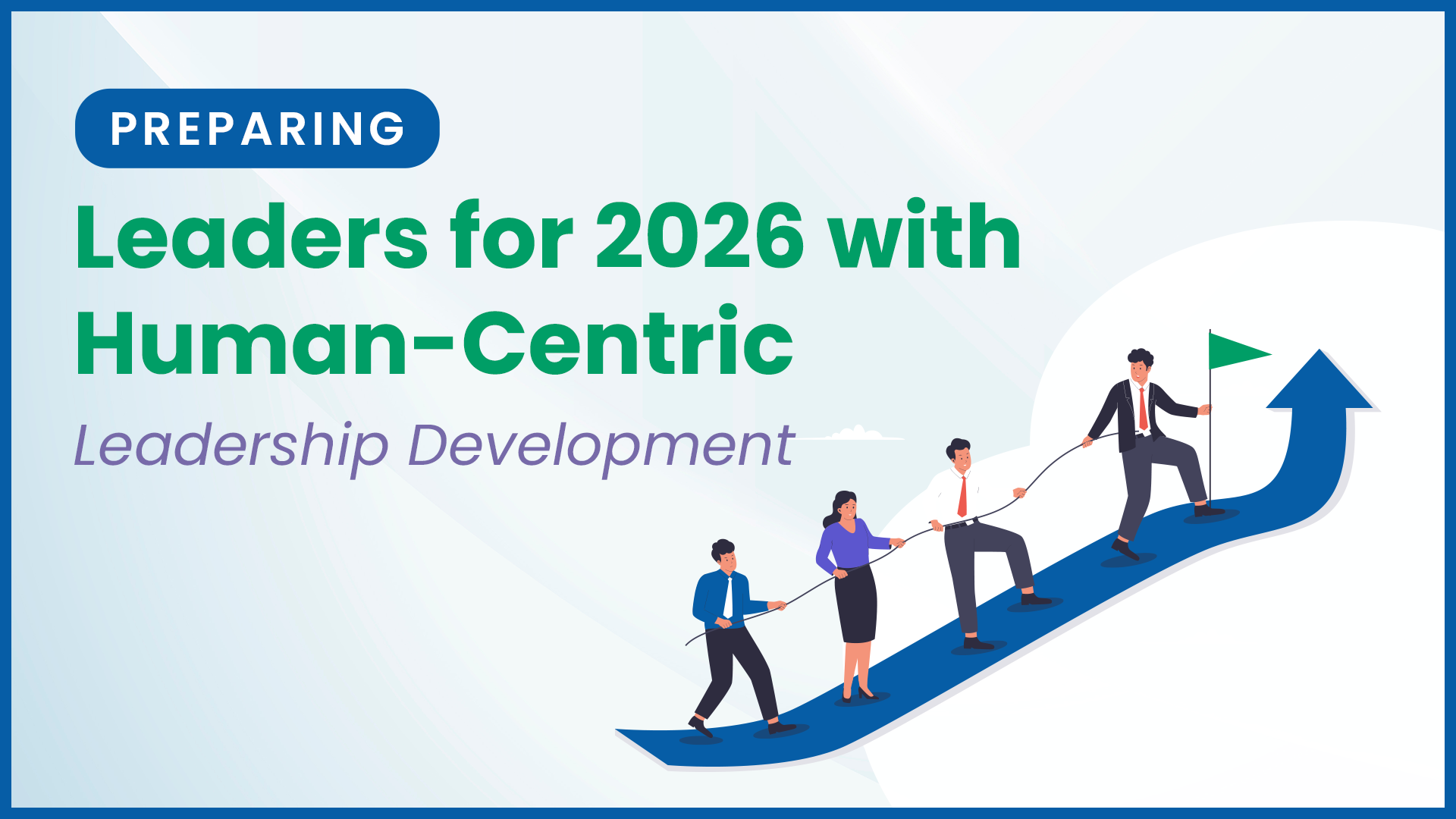
Traditional leadership development programs, the ones built on command-and-control hierarchies and one-size-fits-all training, are crumbling. What’s rising in their place? Human-centric leadership development. This approach doesn’t just teach skills; it transforms how leaders connect with, empower, and inspire their teams.
If you’re an HR leader or organisational decision-maker in India or anywhere else, this isn’t just another trend to monitor. It’s the blueprint for building resilient, adaptive leaders who can drive real business results while keeping people at the heart of everything they do.
What Is Human-Centric Leadership Development?
Human-centric leadership development flips the script on traditional programs. Instead of molding leaders into a predetermined ideal, it recognises that every individual brings unique strengths, perspectives, and potential to the table.
At its core, this approach focuses on three pillars:
Empathy: Understanding and responding to the emotional and professional needs of team members, especially during times of burnout and disruption.
Psychological Safety: Creating environments where people feel safe to take risks, voice concerns, and innovate without fear of judgment or retaliation.
Adaptability: Equipping leaders to pivot quickly in response to change while maintaining focus on employee well-being and organisational goals.
This isn’t soft leadership; it’s strategic leadership. When leaders prioritise the human element, they unlock higher engagement, stronger retention, and teams that actually want to show up and contribute.
Why 2026 Demands a Leadership Revolution
The data tells a stark story. Depression and anxiety cost the global workforce 12 billion working days annually. Yet only 23% of employees feel their organisations genuinely support their mental health. Burnout isn’t just a buzzword, it’s a crisis that’s bleeding talent and productivity from organisations worldwide.
Add to this the rapid integration of AI into daily operations, the continued evolution of hybrid work models, and growing workforce disillusionment, and you have a perfect storm. Leaders who can’t adapt, empathise, and create genuine human connections will struggle to retain top talent and drive innovation.
The good news? Organisations that invest in human-centric leadership development programs are already seeing the payoff. They’re reporting higher employee engagement, improved retention rates, and teams that demonstrate remarkable resilience during periods of change.
Five Trends Reshaping Leadership Development Programs in 2026
- Empathy as the Defining Leadership Virtue
Empathy isn’t a nice-to-have anymore; it’s the foundation of effective leadership in 2026. Leaders who can genuinely understand their team members’ challenges, aspirations, and emotional states build stronger relationships and more cohesive teams.
This means moving beyond surface-level check-ins. It requires active listening, creating space for honest conversations, and responding to needs with meaningful action. Leadership development programs must now include empathy training, emotional intelligence assessments, and real-world practice in navigating difficult conversations.
- AI-Augmented Leadership
AI is transforming how leaders make decisions, personalise employee development, and manage workflows. But here’s the catch: technology should enhance human connection, not replace it.
The most effective leadership development programs in 2026 teach leaders how to leverage AI for data-driven insights while maintaining the human touch that builds trust and loyalty. This includes using AI to identify skill gaps, personalise learning paths, and predict team dynamics and then applying human judgment to act on those insights.
For organisations in India, where digital transformation is accelerating rapidly, this balance between technological capability and human-centric leadership is particularly critical.
- Agile, People-First Leadership Models
Rigid hierarchies are giving way to agile structures that prioritise adaptability, inclusion, and well-being. Leaders need to make quick decisions while ensuring every team member feels valued and heard.
This requires a fundamental shift in how leadership development programs are designed. Instead of lengthy, theoretical courses, programs now emphasise experiential learning, real-time feedback, and iterative improvement. Leaders learn by navigating actual challenges with coaching support rather than memorising frameworks in isolation.
- Data-Driven Personalisation
Generic training modules don’t cut it anymore. Leaders have different strengths, development needs, and learning styles. Data analytics now enables organisations to create personalised leadership development journeys that align with individual capabilities and organisational goals.
This might include using assessments to identify thinking styles, behavioral patterns, and emotional intelligence levels, then tailoring content and coaching accordingly. The result? Leaders who develop faster and more effectively because the program meets them where they are.
- Mental Health and Well-Being as Leadership Priorities
Leaders in 2026 are expected to actively support their teams’ mental health. This means recognising signs of burnout, creating workload balance, and fostering cultures where taking care of yourself isn’t seen as weakness.
Leadership development programs must equip leaders with practical tools: how to have mental health conversations, when to escalate concerns, how to model healthy boundaries, and ways to build support systems within teams.
Also Read- The Impact of Leadership Development Training for Organisations
Designing a Human-Centric Leadership Development Program
If you’re ready to transform your leadership development approach, here’s how to build a program that actually works:
Start with Psychological Safety
Before any skill-building can happen, leaders need to understand how to create environments where people feel safe. This includes:
– Encouraging open communication without fear of retribution
– Modeling vulnerability and admitting mistakes
– Celebrating learning from failure, not just success
– Establishing clear norms around respect and inclusion
Integrate Empathy and Emotional Intelligence
Build these competencies into every aspect of your program:
– Use role-playing exercises to practice difficult conversations
– Incorporate 360-degree feedback that includes emotional impact
– Teach active listening techniques and reflective practices
– Measure empathy growth through behavioral observations, not just self-assessments
Leverage Technology Thoughtfully
Use AI and data analytics to enhance, not replace, human development:
– Personalise learning paths based on individual assessments
– Provide real-time feedback through digital coaching platforms
– Track progress with metrics that matter: engagement, retention, team performance
– Create virtual reality scenarios for practicing high-stakes leadership moments
Focus on Measurable Outcomes
Human-centric doesn’t mean unmeasurable. Track these key indicators:
– Employee engagement scores before and after leadership interventions
– Retention rates among teams with trained leaders
– Innovation metrics: new ideas generated, projects launched, problems solved
– Well-being indicators: burnout rates, mental health utilisation, work-life balance scores
Make It Continuous, Not Event-Based
Leadership development isn’t a one-week workshop. It’s an ongoing journey that includes:
– Regular coaching sessions with personalised feedback
– Peer learning communities where leaders share challenges and solutions
– Microlearning modules that fit into busy schedules
– Quarterly assessments to track growth and adjust development plans
More to Read- Crafting Leadership Development Programmes to Shape Tomorrow’s Leaders
The Business Case for Human-Centric Leadership Development in India
India’s corporate landscape is uniquely positioned to benefit from human-centric leadership development programs. With a young, ambitious workforce, rapid digital transformation, and increasing global competition for talent, organisations that invest in empathetic, adaptive leaders gain a significant competitive advantage.
Consider these realities:
– Indian employees increasingly prioritise workplace culture and leadership quality when choosing employers
– The shift to hybrid and remote work models requires leaders who can build connection without physical proximity
– Mental health awareness is growing, but organisational support still lags, creating an opportunity for forward-thinking companies to differentiate themselves
Research shows that organisations that implement comprehensive leadership development programs often see up to a 50% improvement in retention. They also see 32% fewer voluntary departures, along with measurable increases in productivity and innovation compared with peers that lack such programs. These outcomes not only reduce costs but also strengthen employer brand and drive strategic growth.
The Future Belongs to Human-Centric Leaders
The leadership challenges of 2026 and beyond won’t be solved with outdated playbooks. Organisations need leaders who can balance technological capability with genuine human connection, who can drive results while prioritising well-being, and who can adapt quickly to evolving business needs without losing sight of their teams’ needs.
Human-centric leadership development isn’t just the right thing to do, it’s a smart business move. Companies that invest in developing empathetic, adaptive, psychologically-safe leaders will attract better talent, retain their best people, and build cultures where innovation thrives.
If your business is navigating growth, restructuring, digital transformation, or cultural change, now is the time to reimagine leadership development as a core transformation lever. Organisations that implement comprehensive leadership development programs, like those offered by MARG, which blend decision-making, human skills, and change readiness into tailored learning journeys, see measurable improvements in productivity, retention, culture, and agility.
By equipping leaders at all levels with the skills to motivate teams, navigate change, and foster innovation, these programs help transform strategy into sustainable performance outcomes.