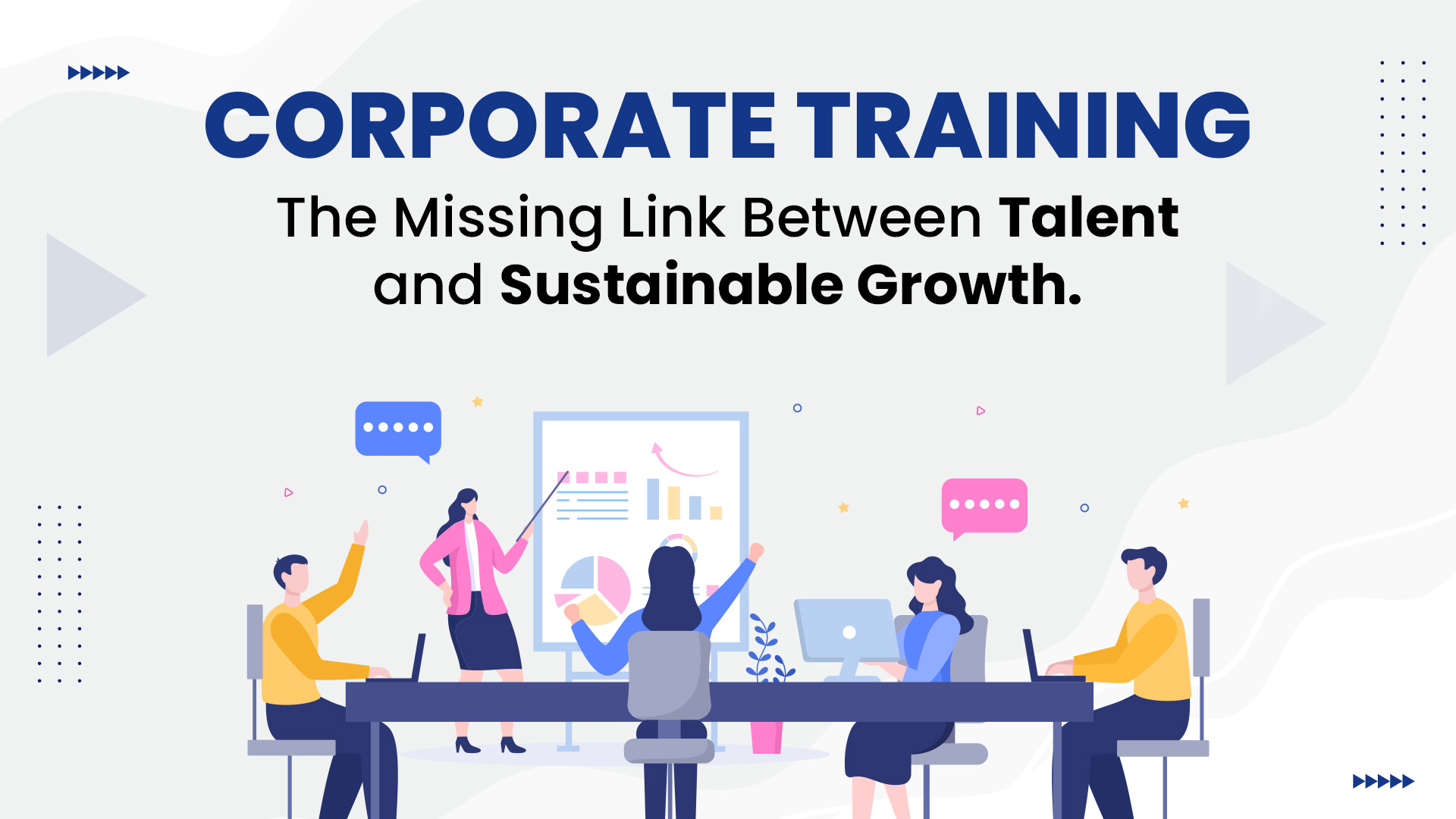
Today’s most resilient organisations share a common trait: they invest deliberately in developing their leaders. In a landscape marked by digital acceleration, evolving workforce expectations, and unpredictable market dynamics, businesses are being called to rethink how they cultivate leaders at every level. The organisations thriving amid volatility are those that treat corporate training as a strategic enterprise priority, not a discretionary expense. Industry research reveals that companies with structured, ongoing employee training programs achieve an extraordinary 218% higher average revenue per employee and 24% higher profit margins compared to those that invest less in development. The message is clear: corporate training is a direct lever for business value creation. This deep-dive explores why smart investments in corporate training are the engine behind growth, innovation, and future-readiness and offers a practical roadmap for moving from intent to impact.
The Evolving Landscape: Why Corporate Training Is Non-Negotiable
Corporate training has become central to competitive strategy. As technology reshapes business at unprecedented speed, the capacity to lead effectively through change has never been more valuable. Hybrid work models, digital transformation, and the imperative for workplace inclusivity are fundamentally re-writing leadership expectations.
Industry benchmarks show that businesses with mature, proactive leadership programs consistently outperform peers in engagement, innovation, and profitability. The most resilient organisations are reallocating budgets to leadership development, connecting investment directly to business performance.
Key drivers behind this shift include:
● Digital Transformation: Companies are embedding leadership fluency in digital tools and analytics, ensuring leaders can steer organisations through continual waves of technological change.
● Rise of Artificial Intelligence: Leadership programs increasingly focus on equipping leaders to integrate AI into strategic decision-making and operations.
● Workforce Diversity and Inclusion: There’s growing recognition that inclusive leaders drive stronger culture, higher retention, and better innovation outcomes.
● Hybrid and Remote Work: Leadership now demands new skills in digital collaboration, remote team engagement, and asynchronous management.
Also Read – Designing Corporate Training Programs for Measurable and Sustainable Impact
Strategic Advantages of Corporate Training
Well-planned leadership development programs deliver tangible, measurable benefits. Here’s how top-performing organisations unlock advantage:
● Organisational Agility: Trained leaders can pivot quickly in response to market shifts, keeping teams focused and resilient during uncertainty.
● Talent Retention: Well-structured corporate training programs drive retention rates 30–50% higher than baseline (Global Corporate Training Market Report, 2024).
● Culture of Innovation: The most innovative companies invest 45% more per employee in training, supporting innovation rates up to 23% higher than industry counterparts (employee training stats, 2025).
● Inclusive and Engaged Teams: Leaders trained in inclusivity and psychological safety create workplaces where diverse talent thrives and voices are heard.
When leadership maturity is high, organisations report better engagement and profitability, signaling that the value of training extends beyond individual development to reshape whole systems of performance.
The Leadership Development Maturity Model: Where Do You Stand?
To determine training needs, many organisations map themselves to maturity models. A typical trajectory moves from ad hoc, fragmented training (‘Foundational’), to programmatic and function-specific (‘Managed’), through to strategy-aligned and enterprise-wide (‘Integrated’ and ‘Transformational’).
● Foundational: Sporadic, uncoordinated efforts leading to inconsistent outcomes.
● Managed: Structured within departments but lacking cross-functional coordination.
● Integrated: Programs aligned with business strategy, fostering agility and organisation-wide impact.
● Transformational: Personalised, data-driven, and embedded in culture – fuelling sustainable innovation and growth.
Most companies remain in the ‘Managed’ zone. True value emerges when corporate development leaps from siloed programs to a culture-defining, metrics-driven enterprise initiative.
Action Step: Begin by auditing your organisation’s maturity level. Identify where progress stalls and focus resources on integrating leadership development strategy with broader business objectives.
Also Read – The Role of Corporate Training Companies in India
Addressing Critical Skill Gaps in the Next-Gen Workforce
Rapid change is highlighting gaps in crucial leadership capabilities. Global HR surveys reveal pressing needs in:
● Digital Fluency: As routine tasks are automated, leaders must harness analytics, AI, and digital platforms effectively.
● Inclusive Management: Skills in cross-cultural communication, unconscious bias, and championing neurodiversity are increasingly non-negotiable.
● Remote Leadership: With hybrid work models here to stay, competencies in digital trust-building, remote engagement, and empathy are top priorities.
● Emotional Intelligence: Managers able to foster psychological safety and resilience are indispensable.
A significant share of organisations admit they lack ‘ready now’ leaders equipped to guide digital and hybrid teams, fuelling urgency for accelerated targeted development.
Breakthrough Trends Shaping Corporate Training
1. AI-Driven, Personalised Learning Paths
Leading organisations now deploy artificial intelligence to personalise upskilling, recommend custom learning journeys, and predict future talent needs. Adaptive coaching and simulation tools lead to higher completion rates and measurable growth in leadership effectiveness.
2. Designing for Inclusion and Equity
Today’s most innovative companieshave developed an inclusive corporate training mindset, where embracing diversity, equity, and accessibility delivers not just cultural but commercial benefits.
3. Reimagined for Hybrid and Distributed Workforces
Traditional classroom programs have given way to blended models: live online sessions, on-demand microlearning, and immersive digital forums that make growth accessible, no matter the timezone or work style.
Action Step: Redesign your leadership curriculum through the lens of hybrid work, equipping leaders for asynchronous rhythms and digital communications norms.
Building Leadership into the Employee Experience
To maximise returns, forward-thinking companies integrate leadership training within core business processes. This includes:
● Corporate Communication Programs: Clarifies vision, builds global trust, and reinforces alignment.
● Digital Fluency Training: Anchors leaders in analytics, automation, and innovation management.
● Well-Being and Resilience: Prevents burnout, supporting leaders in guiding teams through stress and adversity.
● Diversity, Equity, and Inclusion Sessions: Instils habits that create psychologically safe, collaborative environments.
● Role-Specific Succession Training: Prepares emerging leaders for future-critical roles.
Also Read – Top Corporate Training Programs for Employee Development
What the C-Suite and HR Leaders Need to Do Next
Effective corporate leadership training requires both top-down sponsorship and ground-level engagement.
For Executives:
● Anchor leadership outcomes to core business goals such as innovation, market share, or brand strength.
● Give high visibility to leadership initiatives, with regular progress reviews and direct resource commitments.
For People & Talent Leaders:
● Use continuous listening like pulse surveys and 360-degree feedback to spot evolving needs.
● Leverage analytics to track program effectiveness, linking leadership gains to retention, engagement, or promotion velocity.
For Senior Leaders and HR:
● Ensure broad access to leadership development to strengthen mobility and reduce advancement barriers.
● Integrate leadership and equity metrics into talent systems to track progress and guide decisions.
The ROI of Leadership Maturity
Organisations that build and measure sophisticated leadership systems achieve:
● Significantly reduced voluntary turnover.
● Higher revenue per employee.
● Greater success in complex transformations and change management efforts.
The deeper corporate training runs in the organisational fabric, the stronger the outcomes in agility, customer satisfaction, and financial performance.
Take Action: Make Corporate Training Your Growth Advantage
The organisations winning in tomorrow’s markets are already building agile, digitally confident, and inclusive leaders today. For business leaders and HR, your investment in leadership training is the single most strategic lever you control for growth, resilience, and innovation.
Take action:
● Evaluate your leadership development maturity.
● Deploy cutting-edge, personalised training programs.
● Rigorously measure their real impact on business performance.
● Model a culture that values continuous learning and bold leadership at every level.
Connect with Marg Business Transformation today to build a purposive leadership development program that becomes the bedrock of your organisational growth strategy. The dividends will be measured in transformation, talent retention, and a competitive edge that stands the test of any market disruption.