A new era of change
Over the past decade, India’s manufacturing sector has seen strong growth, driven by rising demand, policy incentives, and expanding global reach. But this growth story masks a deeper challenge. Legacy operating models are straining under the demands of a faster, more digital, and more customer-driven world. From plant operations to customer experience, transformation is no longer optional. To remain competitive and unlock future growth, manufacturers in India must rethink how they work, lead, and adapt, with people at the centre of that change.
What’s driving the transformation imperative
Service-driven business models
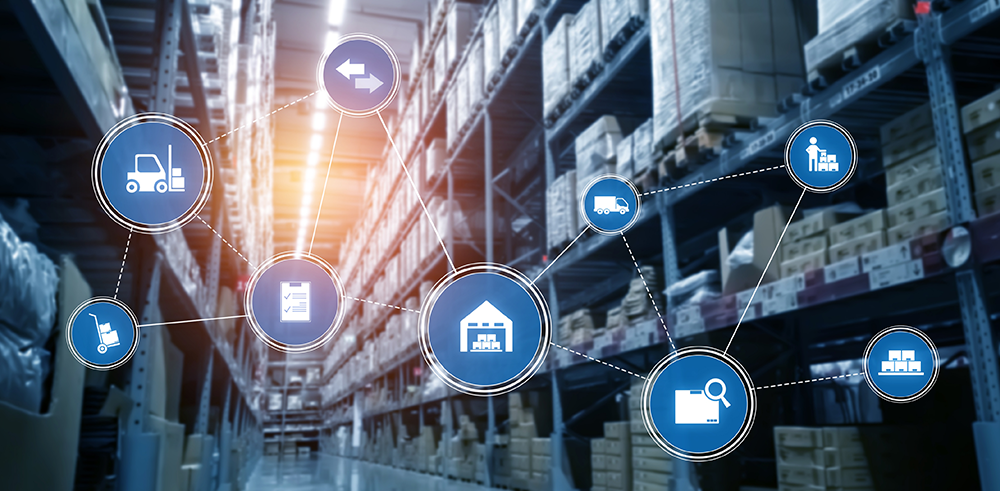
Indian manufacturers are moving toward service-led models that integrate smart technologies. In sectors like capital goods and heavy machinery, businesses are redesigning supply chains with IoT-enabled monitoring and flexible service offerings. This transition toward technology-enabled supply chain models, encouraged by the Make in India initiative, is pushing manufacturers to quickly increase agility and responsiveness.
Regulatory and sustainability pressures
India’s manufacturers face a tightening regulatory environment. Emission standards, waste management mandates, and safety norms are expanding across sectors, while national energy-efficiency initiatives and de-carbonization goals reshape how factories operate. This means manufacturers must modernize systems, improve traceability, and adopt cleaner, more compliant production practices to stay competitive and future-ready.
AI-driven productivity
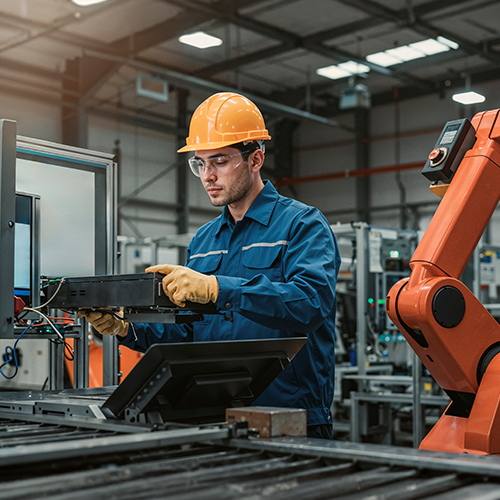
AI has shifted from experimentation to execution across Indian manufacturing. Manufacturers applying AI in predictive maintenance, robotics, and real-time supply chain optimization are reporting productivity gains of up to 40% and up to 90% reductions in unplanned downtime. Those slow to act risk falling behind more agile, tech-enabled competitors.
Talent and capability gaps
80% of manufacturers in India are struggling to hire for advanced roles. As operations become more digital, companies must prioritize upskilling, leadership development, and workforce readiness. Without these investments, even the most ambitious technology strategies are likely to stall before delivering real impact.
Challenges hindering manufacturing transformation
While most manufacturing organizations have ambitious transformation agendas, only a minority deliver truly sustainable results. Common challenges that often hinder transformation efforts include:
Fragmented markets and complex supply chains
53% of manufacturers say adapting quickly to shifting demand and supply is a top transformation driver.
India’s manufacturing sector spans diverse geographies, industries, and buyer segments, making transformation complex to execute. Varying levels of digital maturity, infrastructure gaps, and supply chain disruptions often lead to inconsistent implementation. Manufacturers face challenges in aligning operations across urban and rural sites, export hubs, and domestic markets – all while responding to fluctuating demand and global uncertainties.
Ecosystem and partner misalignment
Manufacturing success depends on alignment across the ecosystem – suppliers, distributors, retailers, and more. But often, transformation efforts fail to bring these players along. For example, 32% of Indian FMCG distributors report misalignment on stock norms as a barrier to partnering. Without ecosystem buy-in, even the best internal transformation efforts can struggle to yield results.


Competitive pressure from agile players
Indian manufacturers face rising pressure from nimble competitors. In electronics, domestic EMS firms are rapidly gaining ground on global giants, reshaping contract manufacturing dynamics. In pharma, midsize firms are innovating in biosimilars and specialized generics. As agile players scale faster and adapt quicker, traditional manufacturers must modernize or risk losing relevance in a more competitive, fast-moving landscape.
Legacy operating-model inertia
Decades-old structures and workflows are often the biggest barriers to change. Hierarchies, siloed systems, and outdated metrics slow down execution. Even when strategy is clear, implementation lags. True transformation demands breaking down these silos and building integrated, agile systems across functions and factories.
The human side of transformation
Technology and strategy are critical, but transformation ultimately hinges on people. Research shows that up to 70% of transformations fail, often due to lack of employee adoption and engagement. In manufacturing, where scale and consistency are vital, companies must focus on enabling their people to succeed in new ways of working. That means focusing on three transformation drivers:
Change management:
Driving lasting transformation
Leadership:
Guiding people through disruption
Culture:
Creating agility at scale
Change management:
Driving lasting transformation
In manufacturing, where ecosystems stretch across factories, suppliers, and distribution channels, operational upgrades alone are not enough. True transformation happens when people embrace and sustain new ways of working. Prosci’s change management methodology offers a structured path to get there – by building early sponsorship, guiding individuals through change with the ADKAR model, and reinforcing new behaviors until they stick. Research shows that organizations applying strong change management are seven times more likely to achieve their goals. Global manufacturer L’Oréal is one example, having used Prosci’s approach to successfully lead complex transformation initiatives with lasting impact.


Leadership:
Guiding people through disruption
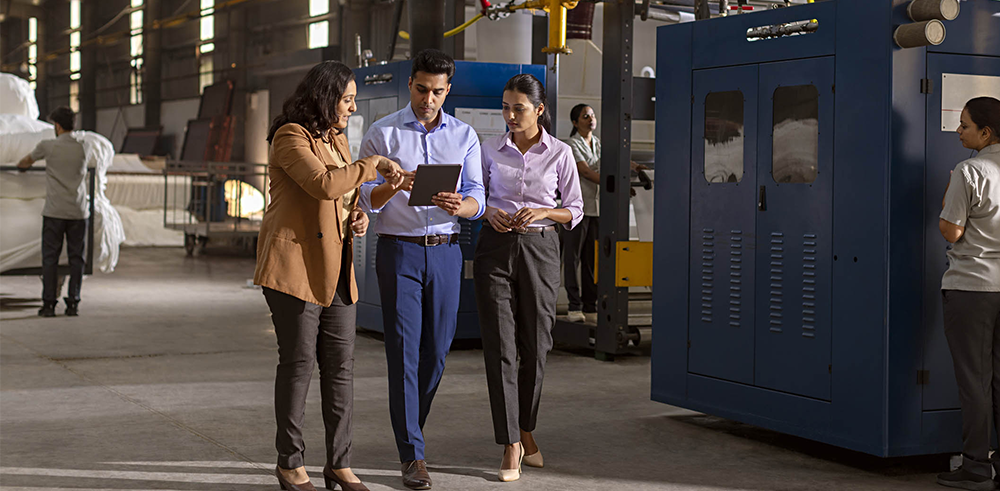
Effective leadership turns transformation from intent into impact. In manufacturing,
leaders must guide multi-generational, cross-functional teams through uncertainty
while sustaining trust and momentum. That means managing cognitive and skill
diversity, addressing resistance with clarity and empathy, and helping employees
see technology as a partner, not a threat. Strong leaders also spot team dysfunction
early and course-correct before it derails progress. Above all, they lead by example,
modelling the behaviours that drive change. When leaders are visible, aligned, and
emotionally intelligent, they build the confidence and cohesion needed to translate
transformation goals into sustainable results.


Culture:
Creating agility at scale
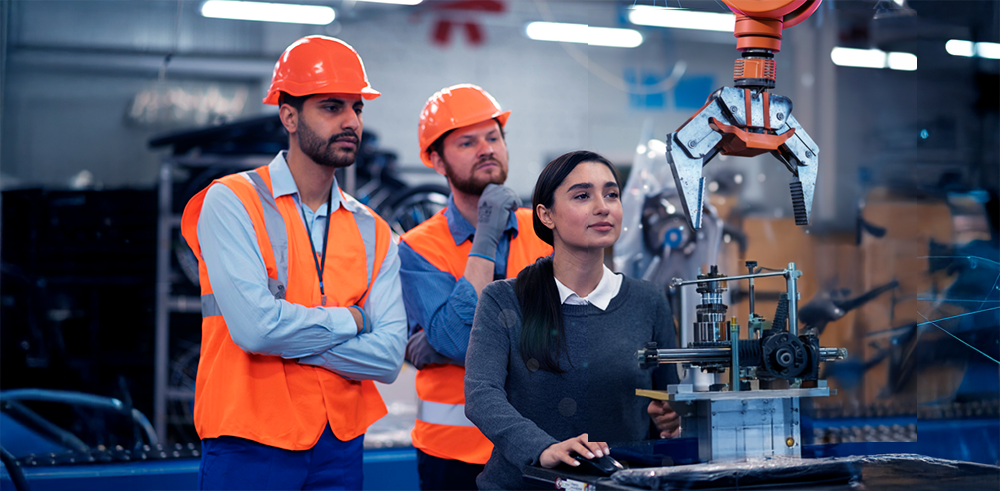
Culture shapes how people behave when no one is watching. In transformation, that
makes all the difference. A change-ready culture encourages adaptability,
collaboration, and continuous learning across factories, labs, and offices. It breaks
silos, promotes psychological safety, and rewards behaviours that align with the
future state. When teams feel empowered to voice ideas, learn from failure, and
support one another, transformation gains real momentum. In the manufacturing industry, where execution speed and precision are critical,
culture must enable not just operational discipline, but collective agility.
Organizations that nurture this kind of culture don’t just manage change – they
multiply its impact.


In manufacturing, where ecosystems stretch across factories, suppliers, and distribution channels, operational upgrades alone are not enough. True transformation happens when people embrace and sustain new ways of working. Prosci’s change management methodology offers a structured path to get there – by building early sponsorship, guiding individuals through change with the ADKAR model, and reinforcing new behaviors until they stick. Research shows that organizations applying strong change management are seven times more likely to achieve their goals. Global manufacturer L’Oréal is one example, having used Prosci’s approach to successfully lead complex transformation initiatives with lasting impact.


Effective leadership turns transformation from intent into impact. In manufacturing,
leaders must guide multi-generational, cross-functional teams through uncertainty
while sustaining trust and momentum. That means managing cognitive and skill
diversity, addressing resistance with clarity and empathy, and helping employees
see technology as a partner, not a threat. Strong leaders also spot team dysfunction
early and course-correct before it derails progress. Above all, they lead by example,
modelling the behaviours that drive change. When leaders are visible, aligned, and
emotionally intelligent, they build the confidence and cohesion needed to translate
transformation goals into sustainable results.


Culture shapes how people behave when no one is watching. In transformation, that
makes all the difference. A change-ready culture encourages adaptability,
collaboration, and continuous learning across factories, labs, and offices. It breaks
silos, promotes psychological safety, and rewards behaviours that align with the
future state. When teams feel empowered to voice ideas, learn from failure, and
support one another, transformation gains real momentum. In the manufacturing industry, where execution speed and precision are critical,
culture must enable not just operational discipline, but collective agility.
Organizations that nurture this kind of culture don’t just manage change – they
multiply its impact.


The business case: why it matters now
Manufacturers across sectors in India stand at a critical juncture. They must adapt to digital disruption, global competition, and shifting consumer needs – or risk being left behind.
To capture growth and remain competitive, manufacturing companies must ensure that change delivers measurable, sustained business impact. Organisations that prioritise change management, leadership, and culture unlock faster ROI, greater resilience, and sustained growth.
Start your transformation journey
If your organization is navigating digital reinvention, sustainability transitions, or
workforce modernization, it’s time to strengthen the human side of transformation.